
Tonight the streets will fill with little witches in pointy hats and capes, collecting sweets door to door. Tomorrow is All Saints’ Day, and the day after, All Souls’. These first days of the dark season have always been about remembering, about the thin line between what we see and what we don’t.
So this Saturday, over a cup of tea, I want to remember the women behind the costume. And I want to untangle a word that has come to mean two very different things.
Two kinds of “witch”
When people say “witch” today, they can mean something quite spiritual and quite specific: spells and rituals, hexes and curses, calling on spirits or energies, Tarot, Ouija and moon magic. Modern witchcraft has become part of a wider New Age spirituality, and you’ll find it everywhere, from bookshops to TikTok.
I want to say this gently and without judgement of anyone, because I know many women come to these practices looking for exactly what we’re all looking for: meaning, power, a connection to their bodies and to something greater than themselves. But as a woman of faith, it’s not a path I walk, and I don’t think it’s what we should picture when we talk about the wise women of the past. Curses and spells are about trying to bend the world, and other people, to your will. That’s a very different thing from what I want to honour today.
Because there’s another meaning hidden under that word. For centuries, in every village, there were women who simply knew things. Which plant soothed a fever, which tea eased cramps, how to gently turn a baby inside the womb, how to sit with a woman through long stretches of labour, what a missed period or a heavy bleed might mean. Knowledge passed from mother to daughter, from neighbour to neighbour, from the older woman to the younger one. So we’re not talking about magic here, but about observation, intuition, experience and care.
That is the woman I want to remember today. And the tragedy is that, in the eyes of fearful men, the line between the two was often erased.
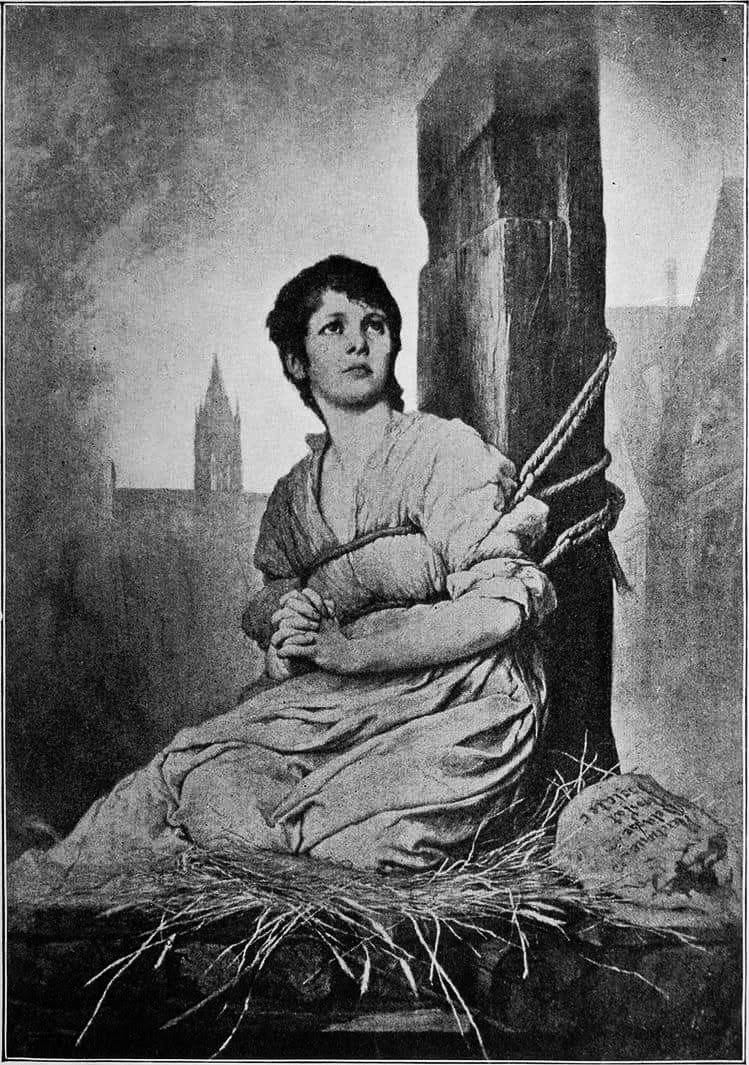
This is such a powerful and disturbing image to me. You can see and feel the fierceness, integrity and wisdom in her eyes.
What really happened
Between roughly the fifteenth and eighteenth centuries, Europe went through what historians call the witch hunts. Historians estimate that around 30,000 to 60,000 people were executed for witchcraft, and the large majority of them were women. They were often older, often poor, often widowed or living on the edges of their community. Women who were easy to accuse and hard to defend. Sadly, the fires were often ignited with the very books these women had been writing and keeping to preserve the wisdom over generations. So not only did the women die, but their knowledge died with them, leaving us with very few sources of the old female ways of healing.
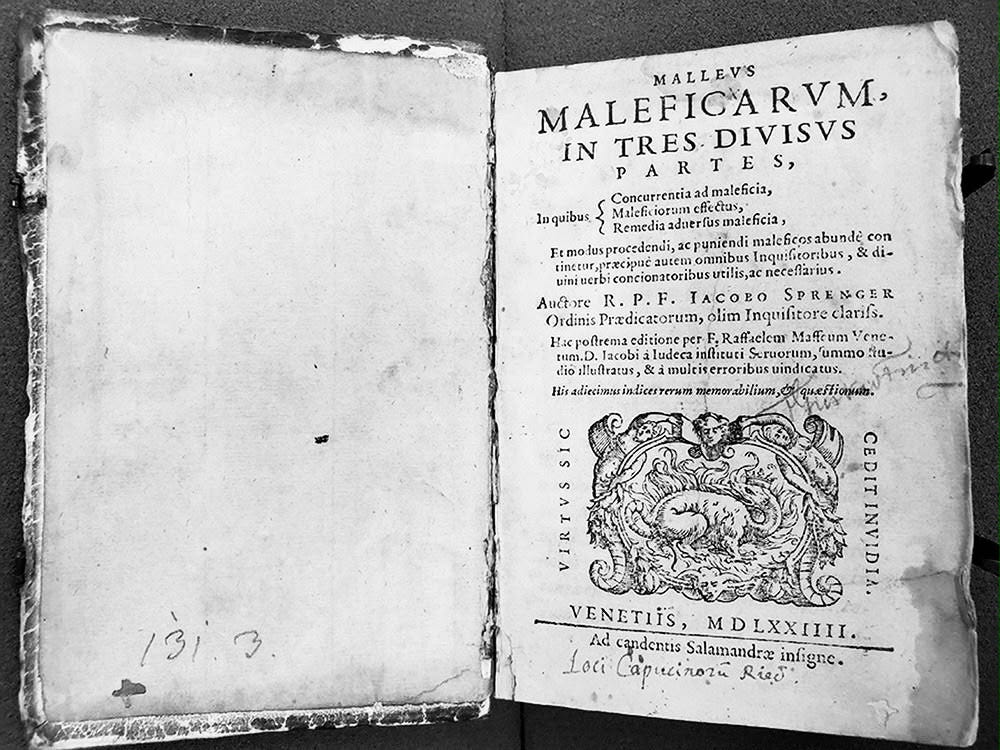
In the 1480s, a handbook for witch hunters appeared, the Malleus Maleficarum, or Hammer of Witches. It’s a deeply disturbing book, full of fear of women’s bodies, women’s desire and women’s power. And in it, there’s a sentence that has echoed for centuries: “No one does more harm to the Catholic Faith than midwives.”
Three books that changed how we see the witch
If this history moves you, three books are worth having on your nightstand this winter.
Witches, Midwives, and Nurses by Barbara Ehrenreich and Deirdre English started as a small pamphlet in 1973, self-published, and quietly became a classic. Its argument is bold: that women were once the healers of ordinary people, with their herbs, their midwifery and their hands-on care, and that the witch hunts, and later the professionalisation of medicine in the nineteenth century, pushed them out. In their telling, this wasn’t a natural evolution but a long struggle in which male institutions took over the care of women’s bodies. Women’s medicine, they wrote, was the people’s medicine.
Caliban and the Witch (2004) and the shorter Witches, Witch-Hunting, and Women (2018) by Silvia Federici look at the same history through a different lens. Federici connects the witch hunts to the enormous changes of their time: common land being fenced off, the rise of a new economy, and a growing desire to control women’s work and their ability to bear children. For her, the witch hunts were about who would own women’s bodies and women’s knowledge. And she makes a point that stays with me: witch hunts are not only history. In some parts of the world, women are still accused and attacked as witches today.
In Defense of Witches by the French-Swiss journalist Mona Chollet (originally Sorcières, 2018) brings it all home to our own lives. Chollet asks which women were most likely to be called witches, and finds them still among us: the independent woman, the woman who chooses not to have children, the woman who grows older without apology. Her book is a defence of all of them, and a quiet invitation to stop being afraid of becoming one.
What historians would add
I love these books, and I also want to remain transparent with you, because honesty is the whole point of this space. Many historians today say that the picture of the witch hunts as mainly a war on midwives and healers is too simple. Midwives were actually rarely accused, and many of them even worked alongside the courts, examining women’s bodies for the so-called witch’s mark. The women who ended up on trial were, more often, simply women in the wrong place: a neighbour in a quarrel, a widow nobody protected, a woman who spoke too sharply (which still, don’t get me wrong, remains tragic).
So why does the story of the persecuted wise woman hits home to so many of us?
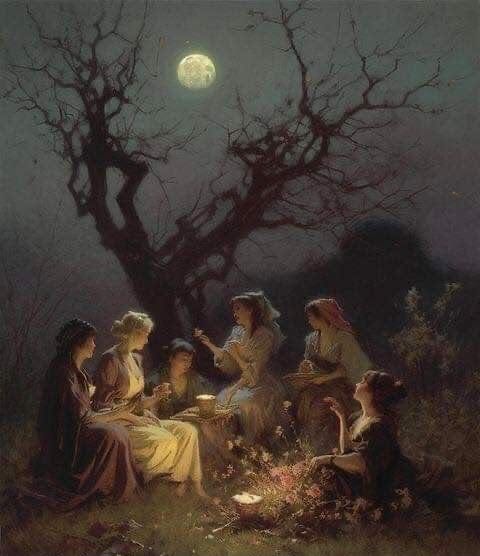
Why it still resonates
I think it’s because, even if the history is more complicated, the feeling behind it is real. For a very long time, women’s knowledge of their own bodies has been doubted, dismissed or taken over by others. The wise woman became the hysterical woman. The woman who knew her cycle became the woman who was “woo-woo”. The woman who trusted her intuition became the woman who should “leave it to the experts”.
Today nobody is burned at the stake (in the West, at least). But many women still know the quieter version of that story: being told their pain is in their head, that their exhaustion is normal, that their questions are a bit too much. Wanting to understand your own body, to use food, plants and prayer as part of your healing, can still be treated as something slightly suspicious, as if it were the same thing as casting a spell.
It isn’t. Knowing which foods nourish your hormones, tracking your cycle, drinking ginger tea for your cramps or raspberry leaf tea in late pregnancy: that’s not witchcraft. That’s women’s wisdom, and increasingly, it’s good science too.
Between two truths
As a woman of faith, I find this history uncomfortable to sit with. So much harm was done in God’s name. I don’t think we should look away from that. And at the same time, my faith is precisely what tells me that every one of those women was created with dignity, that these plants and herbs were given to us as a gift, and that a woman’s body was never something to be feared.
I also don’t want us to romanticise the witch, as if every woman with a basket of herbs was a misunderstood genius, or to swap one kind of blind faith for another. Real wisdom, then and now, means holding two things at once: deep respect for the knowledge that lives in our bodies and our traditions, and a love for good science and honest evidence.
That’s what I hope this little corner of the internet can be: a place where women learn to read their bodies, ask good questions and trust what they find, together.
So tonight, when the little witches knock on your door, maybe give them an extra lil healthy sweet —dark chocolate with medjool dates perhaps— for the wise women who came before them, and for the ones still learning to trust what they know.
With love,
Ninalotte
Leave a comment if this resonated. I read every single one.
Further reading
Barbara Ehrenreich & Deirdre English, Witches, Midwives, and Nurses: A History of Women Healers (1973; Feminist Press reissue 2010)
Silvia Federici, Caliban and the Witch (2004) and Witches, Witch-Hunting, and Women (2018)
Mona Chollet, In Defense of Witches (French original Sorcières, 2018)
Heinrich Kramer, Malleus Maleficarum (1486)
“For her, the witch hunts were about who would own women’s bodies and women’s knowledge.” This sentece really hit me wow, great article!!
beautiful article 🤓