
Grab a cup of tea and let’s talk all things womanhood. Make it a hot one this week. :)
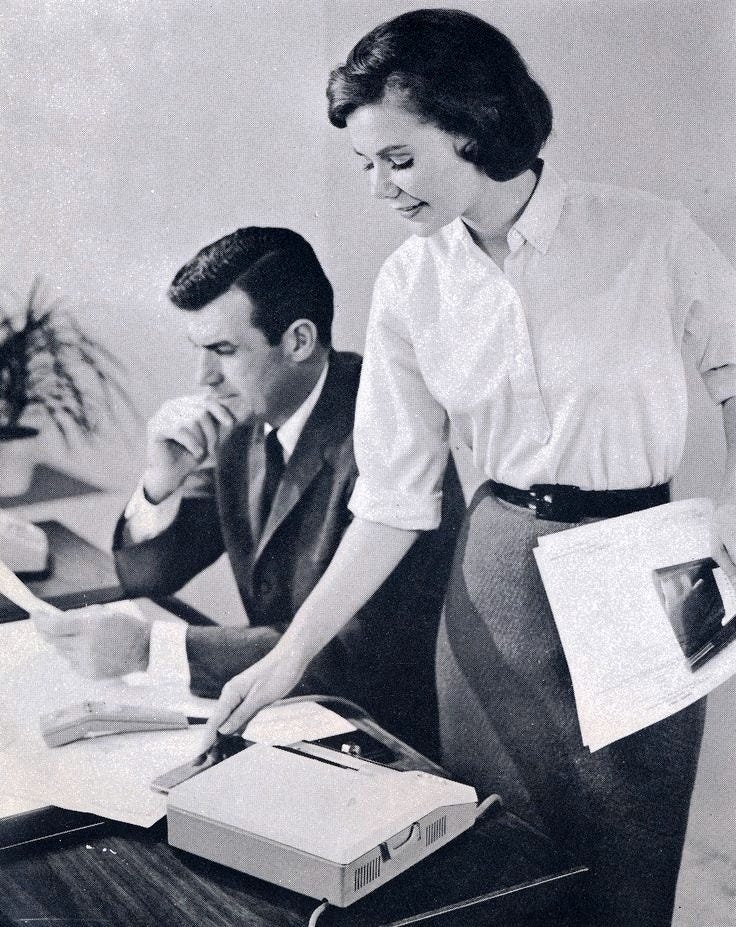
If you’ve ever worked in an office, you probably know the scene. It’s the middle of summer, the air conditioning is blasting, and half the women in the room are sitting at their desks in a cardigan, with a scarf around their neck and both hands wrapped around a mug. Meanwhile, the men in shirt sleeves are perfectly comfortable. Someone jokes that women are “always cold”. Everyone laughs. Nobody touches the thermostat… well, it turns out there might be more to that joke than we thought.
A formula from the 1960s
In 2015, two researchers from Maastricht University, Boris Kingma and Wouter van Marken Lichtenbelt, published a study in Nature Climate Change that went around the world. They pointed out that the standard formula used to calculate comfortable indoor temperatures in offices dates back to the 1960s, and that one of its key inputs, the resting metabolic rate, was based on an average man: around forty years old and weighing about seventy kilos.
They then measured sixteen young women doing light office work. Their metabolic rate was noticeably lower than the standard value, which means they produce less heat at rest. And the temperatures these women found comfortable were higher, somewhere between about 23 and 26°C.
Other things play a role too. On average, women have less muscle mass, and muscle is one of the body’s main heat producers. And as we saw in this week’s Cycle Literacy, our temperature even shifts across the cycle.
What the building scientists would add
As always, there’s nuance. Surprise, surprise. Not every expert agreed with how the story was told. Some building scientists pointed out that today’s comfort standards rely much more on how comfortable people say they feel, men and women, than on one man’s metabolism. They also noted that individuals differ more from each other than men and women do as groups. And many offices are simply set colder than the standards even recommend, because of habits, humidity control or the old idea that air conditioning only works when it’s freezing.
So the cold office isn’t one single villain. But the bigger point still stands, and I think it’s the one worth sitting with: for a very long time, when the world was measured, the default body was a man’s.

The default body
Once you start looking, you see it everywhere.
For decades, crash-test dummies were modelled on the average male body, and studies have found that women are more likely to be seriously injured in comparable car crashes. Until 1993, women of childbearing age were largely kept out of the early phases of drug trials in the United States, which meant many medicines were tested mainly on men and then simply prescribed to women. In 2013, the US authorities halved the recommended dose of a common sleeping pill for women, after it became clear they were still feeling its effects the next morning, at the wheel.
None of this was done out of hatred. It was done out of habit. Man as the standard, woman as the variation. Simone de Beauvoir described exactly this in The Second Sex: man is treated as the neutral, universal human being, and woman as “the other”. Caroline Criado Perez filled a whole book, Invisible Women, with examples of what happens when data quietly leaves women out.
The cold office is a small, almost funny example. But it shows the pattern so clearly. When your body doesn’t match the default, the world feels a little bit off, and you’re the one who’s told you’re “too sensitive”.
The courage to be warm
And this is where I want to bring it back home, to us. How many of us have sat shivering in a meeting rather than ask if the air conditioning could go down? How many have kept quiet about our pain, our tiredness or our needs because we didn’t want to be the difficult one, the dramatic one, the one who’s “always cold”?
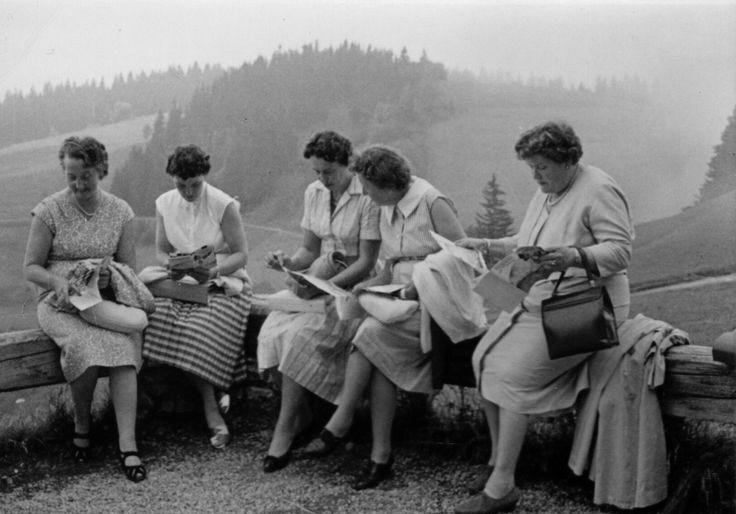
I think there’s something deeply feminine about warmth, in the best sense of the word. Women have kept the hearth burning for centuries. We make the tea, bring the blanket, notice who looks cold and pull an extra chair to the fire. That gift of making others feel warm and welcome is beautiful, and I never want us to lose it.
But warmth isn’t only something we give. It’s also something we’re allowed to need. A body that runs a little colder isn’t a faulty version of a man’s body. It’s simply a woman’s body, designed differently, with its own rhythms and its own wisdom. And it deserves to be taken into account, at the office, in the doctor’s office and at home.
So this week, I’d love for you to practise a small kind of courage: asking for what keeps you warm. Literally, and otherwise.
Questions to sit with this weekend
When did you last stay silent about being uncomfortable, cold, tired or in pain, to avoid being a bother?
Who are the women who made you feel warm and welcome growing up? What did they do?
And what would it look like to offer yourself the same warmth you so easily give to others?
With love, Ninalotte
I’d love to hear where these questions take you. Leave a comment, or reply to this email. I read every single one.
Further reading
Boris Kingma & Wouter van Marken Lichtenbelt, “Energy consumption in buildings and female thermal demand”, Nature Climate Change (2015)
Caroline Criado Perez, Invisible Women: Exposing Data Bias in a World Designed for Men (2019)
Simone de Beauvoir, The Second Sex (1949)