
Pour yourself something warm. This one is a slow conversation.
I want to talk about a sentence. You may have heard it at the kitchen table, in a classroom, at work, perhaps even in a doctor’s office: “Is it that time of the month?”
It’s often said with a smile. Sometimes with a roll of the eyes. Rarely with curiosity. And I’ve been wondering where it comes from, this habit of hearing a woman’s feelings and reaching for her uterus as the explanation.
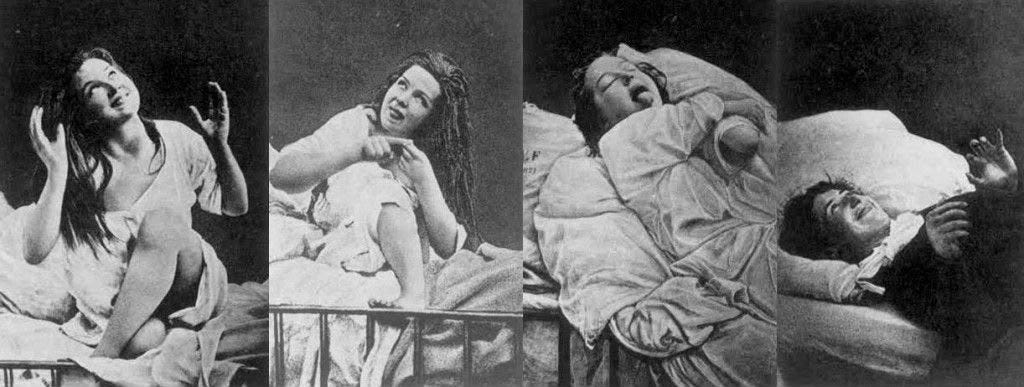
A wandering womb
The story is older than you might think. The word hysteria comes from the Greek hystera: uterus. In ancient Greek medicine, and in Plato’s Timaeus, the womb was imagined as something restless that could wander through the body and cause illness wherever it went.
For more than two thousand years, in one form or another, “hysteria” was the drawer in which women’s suffering was filed. Fainting, sadness, anger, pain, desire, exhaustion: all of it could end up there. It only disappeared from the American psychiatric diagnostic manual in 1980.
I don’t tell you this to make us angry, although a little holy indignation is allowed. I tell it because stories like these don’t vanish. They seep into how we are listened to, and into how we listen to ourselves.
1931: a name is given
In 1931, a New York gynaecologist named Robert Frank described a cluster of symptoms that appeared in the days before menstruation. He called it premenstrual tension. Among the symptoms he listed were headaches, swelling and what he called “foolish actions”. He blamed an excess of estrogen and treated it with diuretics, coffee and tea among them.
Then, in 1953, two British doctors, Raymond Greene and Katharina Dalton, published a paper in the British Medical Journal that gave us the term we still use: premenstrual syndrome.
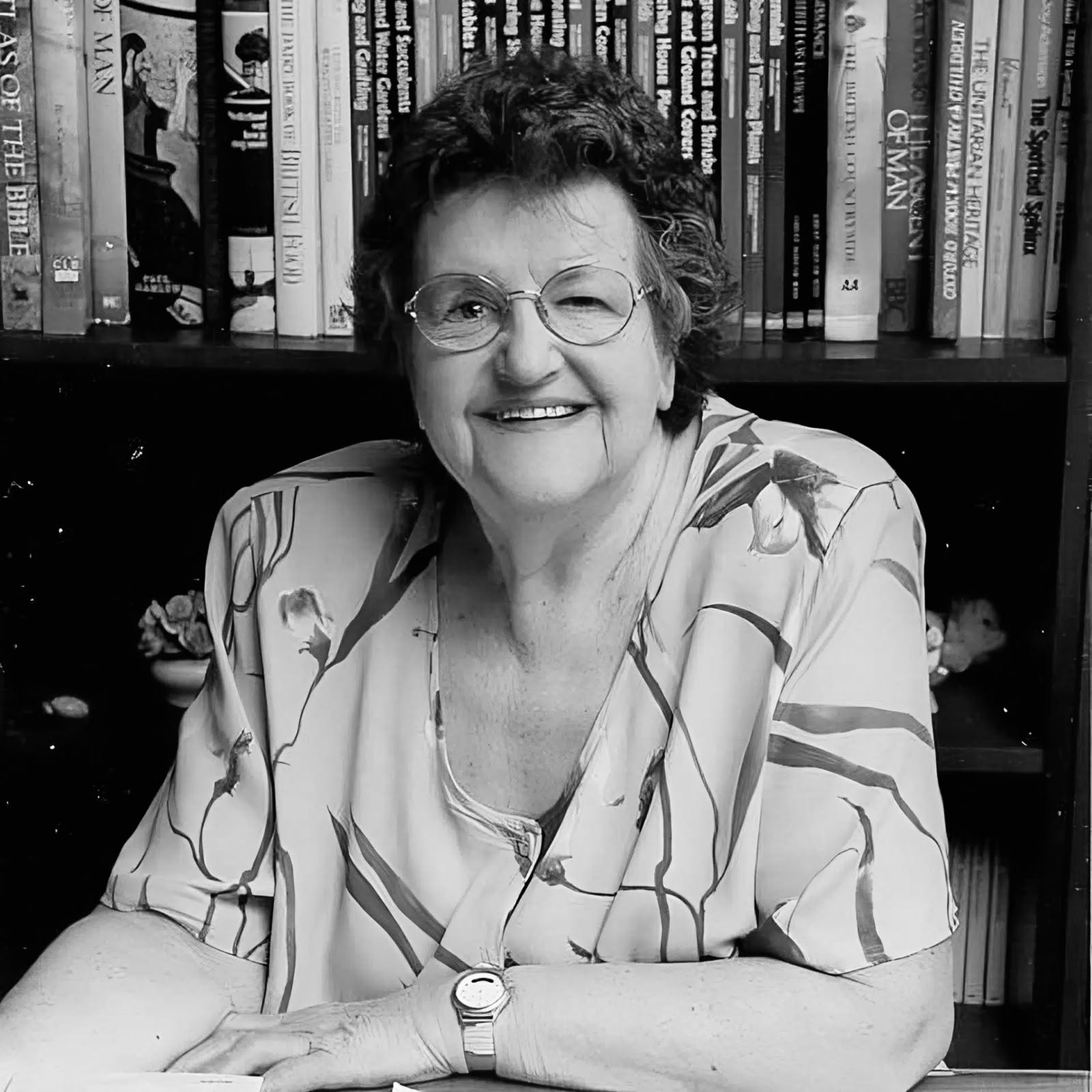
Dalton’s story touches me. She noticed that her own monthly migraines eased during pregnancy. In her practice she saw women whose headaches and asthma attacks returned like clockwork every month. She took that pattern seriously, studied it, and spent her life trying to help women with it. Some of her theories haven’t held up, but her starting point was profound: this pattern is real, and these women deserve an answer.
The double edge of a name
That’s the paradox. A name can set us free. When something has a name, it can be researched, treated, spoken about. Many women felt relief when they first heard “PMS”: so I’m not imagining it.
But a name can also become a cage. “PMS” slipped into everyday language as a way to dismiss a woman’s anger or tears. Her feelings were no longer about something real, a boundary crossed or a grief unspoken, but about her hormones. She’s just being emotional.
And so many of us learned to doubt ourselves twice. First: is this real? Then: and even if it is, am I allowed to say it?
The pain gap
This isn’t only history. In 2001, two American researchers, Diane Hoffmann and Anita Tarzian, published a review with a title that is hard to forget: The Girl Who Cried Pain. Looking across the research, they found that women’s pain was more often underestimated and undertreated, and more often attributed to emotional or psychological causes.
Endometriosis tells the same story in a different form. A 2024 review of studies from around the world found that women wait about six and a half years on average for a diagnosis. One of the reasons they found again and again was normalisation: period pain dismissed as “normal” by doctors, by family, by friends, and sometimes by the women themselves.
Six and a half years of being told it’s nothing.
What happens inside us
What I see in my practice, and what I recognise in myself, is that the deepest harm isn’t only the doctor who didn’t listen. It’s what slowly happens inside a woman who is not believed often enough. She stops believing herself.
She learns to override her tiredness. She calls her pain “dramatic” before anyone else can. She apologises for her tears. She files her own body’s messages in that old drawer marked hysteria.
And yet. Science is slowly catching up with what women have always known. We now know that premenstrual symptoms are not “in our heads” in the dismissive sense. They come from a real, measurable sensitivity of the brain to hormonal change (more on that in Wednesday’s Cycle Literacy).
Learning to listen again
So how do we come home to our bodies after centuries of being told not to trust them?
I don’t think it starts with a protocol. I think it starts with a posture: curiosity instead of contempt.
When the sadness comes in the week before your period, what if you asked, “What are you telling me?” instead of “What’s wrong with me?” Maybe it’s exhaustion asking for rest. Maybe it’s a boundary that’s been crossed all month and finally won’t stay quiet. Maybe it is simply biology, a nervous system that feels the hormonal tide more strongly. That deserves gentleness too.
I believe our bodies were made with care, fearfully and wonderfully made, as the psalmist says. That means a body that speaks is not broken. It’s asking to be heard.

Over to you
I’d love to hear from you, as if we were sitting across the table from each other:
Has there been a moment when your symptoms weren’t taken seriously, by someone else or by yourself?
When you hear “PMS”, does it feel more like a liberation or more like a label?
Let me know in the comments. These stories belong in the light.
With love,
Ninalotte
Sources
Frank R.T. (1931). The hormonal causes of premenstrual tension. Archives of Neurology and Psychiatry, 26(5): 1053–1057.
Greene R., Dalton K. (1953). The premenstrual syndrome. British Medical Journal, 1(4818): 1007–1014. Background: Embryo Project Encyclopedia, Arizona State University
Hoffmann D.E., Tarzian A.J. (2001). The girl who cried pain: a bias against women in the treatment of pain. Journal of Law, Medicine & Ethics, 29(1): 13–27. doi.org/10.1111/j.1748-720x.2001.tb00037.x
Fryer J. et al. (2024). Understanding diagnostic delay for endometriosis: a scoping review. medRxiv preprint. Full text (PDF) · University of York summary
iedereen moet dit lezen!!!
i used to also say to myself “i’m just emotional because of my period.” then i really started viewing it as something magical and realised that actually my body and mind are able to think more clearly, feel more clearly and touch into areas that for example during ovulation might be suppressed. i think the ideas and feelings we get during this time of the month are actually extremely rational , but have always been painted off as irrational, and that is what makes us feel hysterical, because it makes us feel like it’s out of our control. when really i think it’s the most pure and powerful way for a body to give a signal and a deeper understanding of ourselves, something that only women can do and that is in my opinion, magical!!!!